Canvas Under the Sky: Where Hanoi’s Soul Meets Street Art
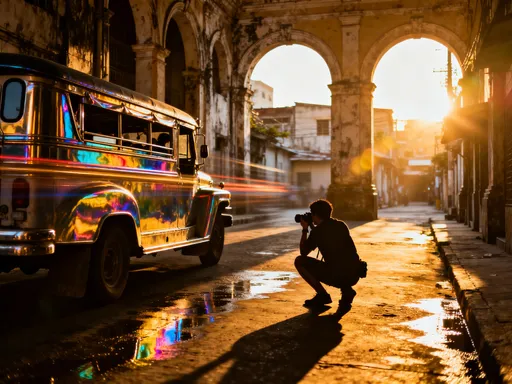
Walking through Hanoi is like flipping through the pages of a living sketchbook. The motorbikes blur by in waves, but if you slow down—really slow—you’ll notice something magical: art hiding in plain sight. From temple carvings to bold murals tucked down alleyways, every corner tells a story. I didn’t expect to feel so inspired just strolling the streets, but Hanoi doesn’t just show you beauty—it lets you see it differently. This city doesn’t rely on museum walls to preserve its creativity; instead, it spills outward, turning sidewalks into galleries and alleyways into exhibition spaces. Here, art isn’t separate from life—it is life, unfolding in real time, painted in motion, shaped by memory, and renewed each day by the quiet gestures of its people.
The First Glimpse: Hanoi Through an Artist’s Eyes
Arriving in Hanoi for the first time, one might feel overwhelmed by the sheer intensity of its rhythm. Motorbikes weave through narrow lanes like schools of fish, voices rise and fall in a steady hum, and the air carries the mingling scents of grilled meat, damp pavement, and jasmine tea. At first glance, the city appears chaotic, a place where order is sacrificed for movement. Yet, within this apparent disorder lies a deeper harmony—one that reveals itself only to those who pause long enough to look. For the artistically inclined, Hanoi offers not confusion, but a kind of visual symphony, where every element contributes to a larger composition. The red of a child’s umbrella against a gray wall, the precise alignment of stacked rice baskets, the way sunlight hits a weathered door at midday—these are not random occurrences, but fragments of an ever-evolving artwork.
What sets Hanoi apart from other cities is its organic integration of art into daily existence. Unlike curated exhibitions confined within gallery spaces, here the city itself becomes the canvas. There are no velvet ropes or timed entries; the experience is immediate, immersive, and constantly shifting. A street vendor’s cart doubles as a color study in reds and yellows. A patch of peeling paint on a colonial-era building becomes a texture experiment in decay and renewal. Even the motion of people—cyclo drivers, schoolchildren in white uniforms, elderly women balancing baskets on bicycles—adds a kinetic energy that mimics performance art. To see Hanoi through an artist’s eyes is to understand that beauty does not require perfection. It thrives in contrast, in imperfection, in the quiet moments between the noise.
For visitors, this shift in perception often comes gradually. At first, the mind races to categorize, to make sense of the sensory input. But with time, the observer begins to notice patterns—repeating motifs in wrought-iron balconies, the deliberate placement of flower pots on windowsills, the way shadows stretch across alley walls in the late afternoon. This is the moment when the city transforms from a place of transit into a place of revelation. It is not about finding masterpieces in the traditional sense, but about recognizing that mastery exists in the way life is lived, arranged, and reimagined every day. Hanoi teaches its visitors to slow down, to look closely, and to find meaning not in grand statements, but in the subtle details that others might overlook.
Old Quarter Chronicles: Murals, Memories, and Hidden Details
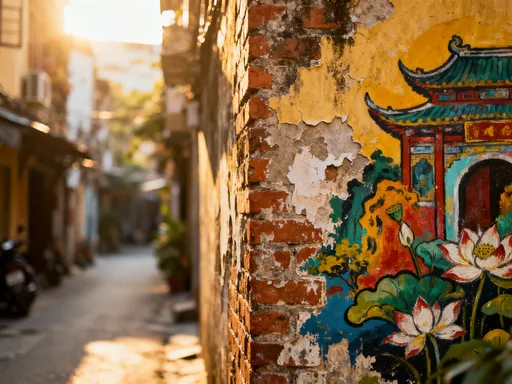
The Old Quarter is the historic heart of Hanoi, a maze of 36 ancient streets each once dedicated to a specific trade—silversmiths, papermakers, herbalists, and more. Today, these narrow lanes remain bustling with commerce, but they also host a quieter, more contemplative form of expression: street art. Unlike the aggressive, politically charged graffiti seen in some global cities, Hanoi’s murals often carry a gentler tone—nostalgic, poetic, and deeply rooted in local culture. They appear on crumbling brick walls, beneath tangled power lines, and beside shops where artisans still practice centuries-old crafts. These artworks do not shout; they whisper, inviting passersby to pause and reflect.
One does not need to search far to find them. A turn down Hang Gai, once the street of silk merchants, might reveal a large-scale painting of a woman in traditional áo dài, her image blending seamlessly with the faded advertisements from decades past. Elsewhere, in a narrow passage off Hang Bong, a mural depicts a child flying a kite above a skyline of tiled roofs, the colors soft and dreamlike, as if pulled from a childhood memory. These pieces often incorporate traditional Vietnamese motifs—lotus blossoms, bamboo groves, dragon patterns—rendered in modern styles that bridge past and present. The textures vary widely: some murals are painted with meticulous detail, while others use spray paint to create abstract washes of color that mimic the wear and tear of time.
What makes these murals so powerful is their context. They do not exist in isolation but respond to their surroundings. A painting of a fisherman might appear beside a shop selling fishing nets; a depiction of a scholar reading under a banyan tree might grace the wall near the Temple of Literature. This dialogue between art and environment transforms the entire neighborhood into a living exhibition. Local artists, many of whom grew up in the Old Quarter, use these walls to reclaim forgotten spaces and rekindle collective memory. In doing so, they preserve cultural identity in a city that is rapidly modernizing. For the observant traveler, these murals are not just decorative—they are acts of storytelling, each one a quiet tribute to the resilience and creativity of Hanoi’s people.
From Temple Walls to Pagoda Panels: Spiritual Art in Motion
Amid the urban energy of Hanoi, spiritual sites offer spaces of stillness and reflection, where art takes on a sacred dimension. The Temple of Literature, dedicated to Confucius and Vietnam’s scholarly tradition, is a masterpiece of architectural and artistic harmony. Stone stelae rest on the backs of stone turtles, each inscribed with the names of doctoral graduates from centuries past. The carvings are precise, the calligraphy elegant, and the overall atmosphere one of reverence. Unlike the spontaneous energy of street art, the artistry here is deliberate, refined over generations, and deeply symbolic. Every element—from the layout of the courtyards to the patterns on wooden beams—reflects philosophical principles of balance, discipline, and respect for knowledge.
Similarly, Trấn Quốc Pagoda, Hanoi’s oldest Buddhist temple, presents a different aesthetic rooted in tranquility and devotion. Nestled beside West Lake, its red lacquered pillars and curved roofs rise gracefully against the skyline. Inside, painted panels depict scenes from Buddhist teachings, while incense smoke drifts through the air like a veil between worlds. The artwork here is not meant to impress but to guide—to encourage contemplation, mindfulness, and inner peace. Repeating motifs such as lotus flowers, Bodhi trees, and flowing water serve as visual metaphors for spiritual growth and enlightenment. These symbols are not merely decorative; they are integral to the function of the space, helping worshippers focus their thoughts and emotions.
What unites these sacred sites is their emphasis on continuity. The artistic traditions practiced here have been passed down through generations, preserved through careful restoration and ongoing ritual use. Unlike temporary street murals that may fade or be painted over, the art in temples and pagodas is maintained with reverence, ensuring its survival for future generations. For visitors, these spaces offer more than historical insight—they provide a counterpoint to the fast pace of modern life. They remind us that art can serve a higher purpose, one that transcends aesthetics and touches the soul. In a city where change is constant, these spiritual centers stand as anchors, preserving the depth and dignity of Hanoi’s artistic heritage.
Coffee Culture as Creative Catalyst
In Hanoi, coffee is more than a morning ritual—it is a cultural institution that fuels both conversation and creativity. The city’s café culture thrives in tucked-away spaces: third-floor walk-ups with iron railings, tucked behind trees on quiet side streets, or perched above bustling sidewalks where the world moves in fast motion below. These cafés are not just places to drink; they are social hubs, quiet retreats, and, increasingly, informal galleries. Many display artwork on their walls—original paintings, ink drawings, and prints by local illustrators—transforming them into intimate exhibition spaces accessible to anyone with a cup of coffee and a willingness to linger.
The slow pace of Hanoi’s coffee ritual encourages observation and reflection. A single cup of egg coffee, rich and velvety, can last for an hour or more. During that time, a visitor might sketch in a notebook, write in a journal, or simply watch the world go by. The low tables, cushioned seating, and soft lighting create an atmosphere conducive to creativity. Students gather to study, writers tap on laptops, and artists unfold their portfolios. Conversations unfold in hushed tones, often touching on literature, design, or the latest neighborhood mural. In this way, cafés become incubators for artistic exchange, where ideas are shared as freely as sugar packets.
While specific café names are not highlighted here due to the evolving nature of the city’s landscape, the experience they offer is consistent across districts. Whether in the French Quarter or deeper in the Old Quarter, these spaces share a common ethos: they value time, presence, and personal expression. Some owners actively support local artists by hosting monthly exhibitions or selling prints. Others curate playlists that blend traditional Vietnamese music with ambient sounds, enhancing the sensory experience. For travelers, visiting a Hanoi café is not just about tasting a unique brew—it’s about stepping into a mindset where creativity is nurtured, not rushed. It’s a reminder that inspiration often comes not in grand gestures, but in quiet moments over coffee, surrounded by art that feels both personal and universal.
The Art of Street Life: Vendors, Portraits, and Fleeting Performances
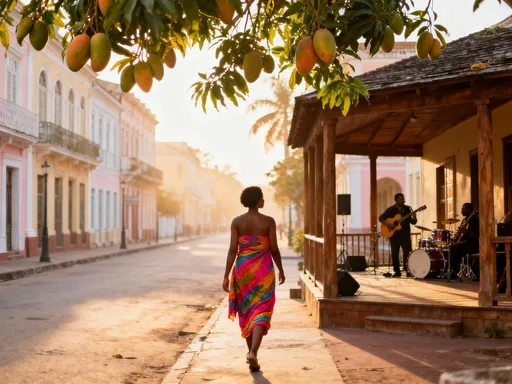
Beyond murals and temples, Hanoi’s most dynamic art form unfolds in the everyday lives of its people. The city’s vendors, artisans, and laborers shape a visual narrative that is spontaneous, authentic, and deeply expressive. A fruit seller arranges mangoes and dragon fruit in radiant gradients, creating a still-life composition that shifts with each transaction. A tailor sits cross-legged on a wooden stool, her hands moving with rhythmic precision as she stitches a garment, the needle catching the light like a tiny brushstroke. These moments, fleeting and unposed, form a living exhibition visible only to those who look with intention.
Even the act of waiting becomes a performance. Elderly men gather in small parks to play chess, their movements slow and deliberate, the wooden pieces clicking like metronomes. Children balance on bicycles with baskets twice their size, navigating traffic with surprising grace. At dawn, street sweepers move in synchronized patterns, their brooms tracing arcs in the dust, turning labor into choreography. These scenes are not staged for tourists; they are part of the city’s natural rhythm, yet they possess an undeniable aesthetic quality. The colors, textures, and movements combine to form a kind of urban poetry, written in real time and erased as quickly as it appears.
For the mindful observer, these moments offer profound insight into Hanoi’s character. They reveal a culture that values craftsmanship, patience, and dignity in work. There is no separation between function and form—every action, no matter how mundane, is performed with care. A woman selling pho arranges herbs with the precision of a florist. A carpenter sands wood with a focus that borders on meditation. These are not artists in the formal sense, yet their lives contribute to the city’s visual richness in ways that no gallery could replicate. To witness them is to understand that art in Hanoi is not something you go to see—it is something you learn to see all around you.
Best Times and Viewing Tips: How to See Like a Local Artist
To truly experience Hanoi’s artistic depth, timing and approach matter. The city reveals different layers depending on the hour, season, and mindset of the observer. Early mornings, just after sunrise, offer a rare clarity. The light is soft and golden, casting long shadows that accentuate textures—the cracked paint on a wall, the weave of a bamboo basket, the ripple of water in a roadside puddle. Fewer motorbikes mean quieter streets, allowing for a more immersive experience. This is the ideal time to walk through neighborhoods like Hang Gai or Ta Hien, where murals are easier to appreciate without the midday glare or crowds.
Golden hour, just before sunset, provides another window of visual magic. The warm light bathes the French colonial buildings in a honeyed glow, enhancing the contrast between old and new. Shadows stretch across alleyways, creating natural frames for street scenes. This is also a prime time to visit West Lake or the botanical gardens, where the reflections on the water amplify the city’s colors. For those interested in photography or sketching, carrying a small notebook or portable tablet allows for quick captures without disrupting the flow of the moment.
Practical choices also shape perception. Using public transport or renting a bicycle enables quieter movement through the city, reducing the barrier between observer and observed. Walking at a slower pace—without a fixed destination—encourages spontaneous discoveries. Engaging with local markets, whether buying fruit or watching a vendor prepare food, offers insight into the artistry of daily routines. Above all, the key is presence: putting away distractions, listening to sounds, noticing details, and allowing the city to unfold naturally. There is no need to chase famous landmarks; the most meaningful moments often happen in forgotten corners, where art exists not for recognition, but simply because it can.
Beyond the Frame: Why Hanoi Changes How You See the World
The lasting impact of Hanoi is not measured in souvenirs or photo albums, but in a subtle shift in perception. Those who spend time absorbing its layered artistry often find that their vision changes long after they’ve left. They begin to notice details in their own cities—the way light hits a brick wall, the symmetry of stacked crates at a farmers’ market, the quiet dignity of a bus driver’s uniform. Hanoi teaches a new way of seeing: not as a tourist seeking highlights, but as a witness attuned to the beauty of the ordinary.
This transformation is not about adopting a new skill, but about reclaiming an old one—the innate human ability to pay attention. In a world that often values speed and efficiency, Hanoi reminds us that meaning lies in slowness, in observation, in the spaces between. The city does not offer a single grand revelation, but a series of small awakenings: a child’s drawing taped to a shop window, the rhythm of a cobbler’s hammer, the way steam rises from a bowl of pho in the cool morning air. These moments, seemingly insignificant, accumulate into a deeper understanding of place and presence.
Ultimately, Hanoi’s greatest gift is not its art, but the mindset it inspires. It encourages a life lived with greater awareness, where every street corner holds the potential for wonder. It challenges the notion that creativity belongs only to artists, showing instead that it resides in the way people live, work, and connect. For the traveler, especially one seeking meaning beyond the surface, Hanoi offers a quiet revolution—one that begins not with a destination, but with a way of looking. And once you’ve learned to see like Hanoi, you may never look at the world the same way again.