Lost in the Rhythm of Paramaribo’s Soul
You know that feeling when a city just *gets* you? That’s Paramaribo. Far from the usual tourist trails, this vibrant capital pulses with color, sound, and stories. I didn’t just visit—I *felt* it. From colonial courtyards humming with Creole jazz to hidden galleries where art speaks in Maroon patterns, every corner revealed a deeper layer of Suriname’s rich identity. This is travel that doesn’t just show you a place—it lets you live it. In a world where so many destinations feel polished for consumption, Paramaribo remains refreshingly unscripted. It does not perform for outsiders. Instead, it invites them in, gently, with warmth and authenticity, to witness a culture that thrives on memory, music, and mutual respect.
First Impressions: A City Like No Other
Arriving in Paramaribo is like stepping into a living photograph—vivid, textured, and quietly animated. The first thing you notice is the architecture: grand wooden buildings from the Dutch colonial era, painted in sun-kissed hues of ochre, coral, and mint green. These are not museum pieces frozen in time but functional, breathing spaces—government offices, family homes, small businesses—that have adapted gracefully across centuries. The city center, designated a UNESCO World Heritage site in 2002, stands as one of the most intact examples of Dutch colonial urban planning in the Americas. Yet what sets Paramaribo apart is not just its historical value, but how seamlessly the past integrates with the present.
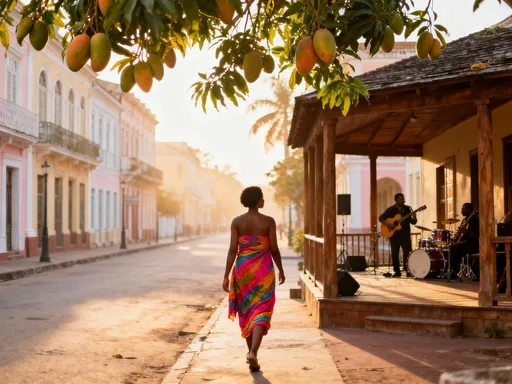
Walking along Independence Street or crossing the historic Waterkant, where 18th-century warehouses overlook the Suriname River, you feel the rhythm of daily life. Men in crisp white shirts sip fresh coconut water under almond trees. Women in flowing African prints balance baskets on their heads with effortless grace. Children laugh as they chase each other through shaded plazas, their voices blending with the distant hum of a passing bicycle bell. There’s no rush, no urgency—just a natural flow, as if the city itself breathes in long, deliberate waves.
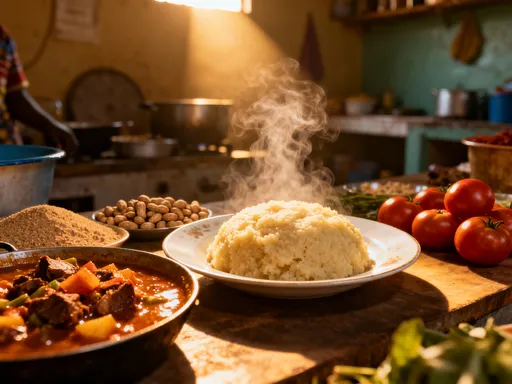
This atmosphere is shaped by Suriname’s remarkable cultural mosaic. Once a plantation colony, the nation today is home to descendants of enslaved Africans, indentured laborers from India and Java, Indigenous communities, Lebanese traders, and European settlers. Rather than existing in isolation, these groups have woven their traditions into a shared national fabric. You taste it in the food—roti filled with curried goat, smoked fish with pom, a Javanese chicken stew called *nasi goreng* served beside a Creole pepperpot. You hear it in the languages—Dutch spoken with a lilting Creole cadence, Sranan Tongo used among friends, Hindi and Javanese whispered in market stalls. This diversity isn’t performative; it’s lived, ordinary, and deeply rooted. From the moment you land at Johan Adolf Pengel International Airport, you are not just entering a country—you are stepping into a conversation that has been unfolding for generations.
The Heartbeat of Culture: Onrustplein and the Central Market
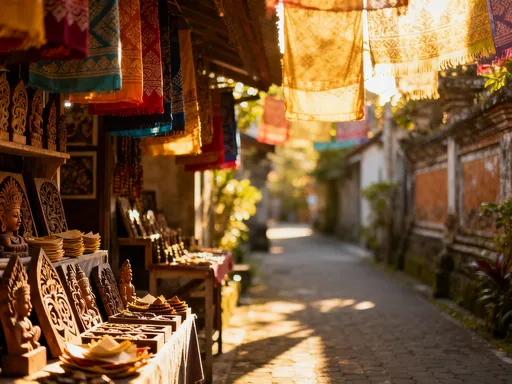
If Paramaribo has a cultural engine, it is the Central Market, anchored by Onrustplein Square. This is not a sanitized tourist bazaar but a bustling, sensory-rich ecosystem where commerce and community are inseparable. The market opens early, as women in vibrant headwraps lay out their goods on long wooden tables beneath bright tarps. The air carries a layered scent—ripe mangoes, smoked fish, pungent herbs, and the earthy aroma of freshly ground nutmeg, one of Suriname’s most prized exports.
Visitors are drawn to the colorful produce: purple yams, spiky soursop, bundles of bitter melon, and cassava roots as thick as forearms. But the real treasures lie in the stories behind the stalls. An elderly vendor might explain how her grandmother used cassava to make *bangi*, a traditional dish wrapped in banana leaves and slow-cooked over fire. Another might offer a taste of *pica zout*, a fiery condiment made from chili peppers and salt, warning with a smile that “one drop is enough for the bold.” These interactions are not transactions—they are transmissions, small acts of cultural preservation passed from hand to hand.
Onrustplein itself serves as a gathering point, where neighbors meet to exchange news, musicians play impromptu sets on weekends, and elders sit on benches beneath the banyan trees, speaking in Sranan Tongo, the lingua franca of the streets. The market is also a place of quiet resistance—a space where Creole women, many of them self-employed entrepreneurs, sustain economic independence and uphold culinary traditions that might otherwise fade. For travelers, the lesson is clear: to understand Paramaribo, you must slow down, engage, and listen. Buying a bag of spices is one thing; learning how they are used, why they matter, and who brought them here—that is how connection begins.
Sacred Spaces: The Wooden Cathedral and Religious Harmony
Rising above the city skyline like a carved wooden dream, the Cathedral of Saint Peter and Paul is impossible to miss. Completed in 1885, this Neo-Gothic marvel is constructed entirely of greenheart and teak—durable tropical hardwoods that have withstood over a century of humidity and rain. At 44 meters tall, it is the largest wooden structure in the Western Hemisphere, a testament to both Dutch engineering and local craftsmanship. Inside, sunlight filters through stained-glass windows, illuminating polished pews and a soaring altar where Creole gospel choirs often sing on Sundays, their voices echoing like thunder through the nave.
But the cathedral’s significance extends beyond its architecture. It stands as a symbol of Suriname’s rare and enduring religious harmony. Within a single city block, visitors can find the Ahmadiyya Mosque with its elegant minaret, the Keizerstraat Synagogue—the oldest in the Americas still in continuous use—and the Arya Dewaker Hindu Temple, its spire adorned with intricate carvings of deities. This proximity is not accidental; it reflects a national ethos of tolerance and coexistence. Suriname has no official state religion, and its constitution guarantees freedom of worship for all.
Interfaith dialogue is woven into daily life. During Diwali, neighbors of all backgrounds are welcomed into Hindu homes to share sweets. At Eid, Muslim families distribute meals to non-Muslim friends. On Keti Koti, a national holiday commemorating the abolition of slavery, people of all faiths gather in Onrustplein to sing, dance, and honor shared history. The cathedral, too, plays a unifying role—its annual Christmas concert draws crowds from every community, not just Christians. Here, faith is not a boundary but a bridge. For travelers, this quiet pluralism offers a powerful reminder: peace is not the absence of difference, but the presence of respect.
Art as Identity: Exploring Local Galleries and Studios
Paramaribo’s creative spirit thrives in intimate spaces—small galleries, community centers, and converted warehouses where artists transform memory into medium. Unlike commercial art districts in larger cities, these venues are not designed for spectacle. They are places of dialogue, reflection, and resilience. At the Wat Rasaeli Cultural Center, founded by a group of Afro-Surinamese women, batik textiles tell stories of Maroon resistance, spiritual beliefs, and ancestral journeys. Each pattern carries meaning: the *ankaa* symbol for strength, the *watra* motif for water and life, the spiral representing continuity.
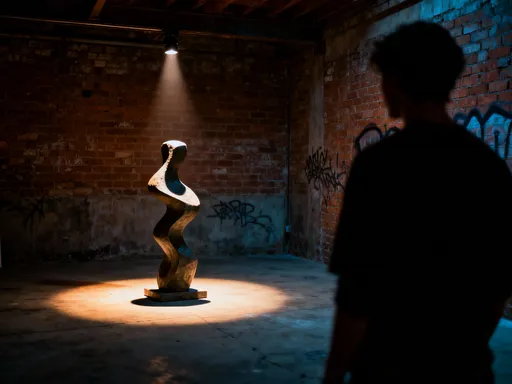
Other artists work in sculpture, using reclaimed wood and metal to craft pieces that speak to colonial history and cultural rebirth. In a studio near the city’s old botanical gardens, a young sculptor shapes figures inspired by Winti, the traditional Afro-Surinamese spiritual system, blending reverence with modern expression. Meanwhile, painters experiment with Caribbean surrealism, layering dreamlike imagery with social commentary—floating houses, upside-down flags, children holding books made of leaves.
What makes Paramaribo’s art scene so accessible is its openness. Many galleries host weekly open houses, where visitors can meet artists over cups of Surinamese coffee—dark, strong, and often sweetened with condensed milk. Workshops in batik, drumming, or storytelling are available to travelers who wish to engage more deeply. These experiences are not packaged for tourists; they are shared, often spontaneously, with those who show genuine interest. In this way, art becomes more than decoration—it becomes a form of cultural continuity, a way of ensuring that stories survive, evolve, and are passed on.
Soundscapes: Where Music Is Never Just Background Noise
In Paramaribo, music is not something you merely hear—it is something you feel in your bones. It spills from open windows, echoes down alleyways, and rises from backyard patios where *kaseko* bands rehearse with drums, horns, and electric guitars. Kaseko, a genre born in the 1930s, blends African rhythms, European military brass, and Caribbean calypso into a high-energy sound that moves both body and soul. It is the soundtrack of celebration, of protest, of everyday joy.
But kaseko is only one thread in Paramaribo’s sonic tapestry. In the Javanese neighborhoods, the metallic chime of *gamelan* ensembles fills the air during festivals and family gatherings. Indo-Surinamese communities keep Hindustani film music alive, singing along to classic Bollywood melodies at weddings and religious events. And in the Creole quarters, gospel choirs practice weekly, their harmonies rising like smoke from church basements.
Local radio stations reflect this diversity, seamlessly blending genres in a single hour—first a Hindi devotional song, then a Javanese *kroncong* ballad, followed by a kaseko hit from the 1980s. During Keti Koti in July, the entire city becomes a stage. Families gather along the riverfront, children wave red, green, and gold flags, and musicians perform songs of freedom and remembrance. The air vibrates with drums, horns, and voices raised in unity. Silence, in Paramaribo, is not golden—it is rare, and often unwelcome. Music here is not background noise; it is memory, identity, and resistance made audible.
Hidden Courtyards and Cultural Houses: Off-the-Beaten-Path Gems
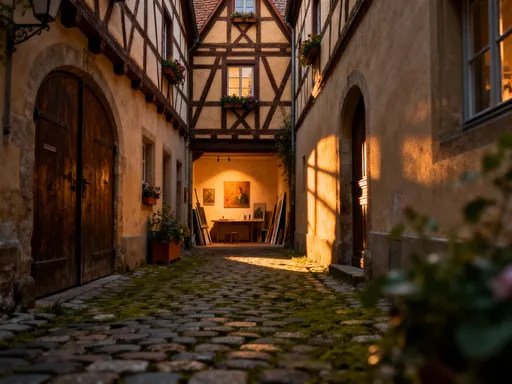
Beyond the main avenues and public squares, Paramaribo’s deepest cultural expressions unfold in its hidden courtyards—private, leafy spaces tucked behind wooden gates where families host evenings of poetry, music, and dance. These are not performance spaces for tourists but intimate gatherings rooted in tradition. Some, like the Academie voor Kunsten en Wetenschappen, occasionally open their doors to visitors, offering guided tours and cultural nights where guests can listen to spoken word in Sranan Tongo, watch traditional *awasa* dance, or sip herbal tea with elders.
These courtyard events are characterized by their warmth and authenticity. There are no ticket booths, no souvenir stands, no staged photo ops. Instead, there is conversation, connection, and a quiet sense of belonging. A grandmother might share a folk tale about Anansi the spider, a symbol of wisdom and survival in Afro-Caribbean tradition. A young poet might read an original piece about identity and migration. A drummer might invite guests to try a simple rhythm on a *skratji*, a traditional scraper instrument.
For travelers, these moments offer a rare gift: the chance to be present without being performative. There is no pressure to capture the perfect image or collect a checklist of experiences. Instead, the invitation is to listen, to learn, and to be moved. Respecting these spaces means approaching them with humility—asking permission before taking photos, speaking softly, and recognizing that some stories are not meant for export. In doing so, visitors become not spectators, but guests—honored participants in a culture that values depth over display.
Why This Kind of Travel Matters: Deep Connection Over Checklist Tourism
In an era dominated by fast travel and curated social media moments, Paramaribo offers a different model—one rooted in slowness, reciprocity, and genuine human connection. This is not a destination for those seeking luxury resorts or Instagrammable landmarks. It is for those who wish to understand, to feel, and to be changed. Traveling here is not about collecting sights but about absorbing stories—about the woman who sells nutmeg to support her grandchildren, the artist who paints her grandmother’s dreams, the choir that sings freedom into existence every Sunday.
Meaningful travel begins with humility. It means recognizing that culture is not a product to be consumed but a living, evolving conversation. It means listening more than speaking, observing more than photographing, and leaving space for surprise. In Paramaribo, every interaction carries the potential for transformation—not just for the visitor, but for the host. When a traveler takes the time to learn a few words of Sranan Tongo, to try a new dish with curiosity rather than caution, to attend a community event with respect, they contribute to a cycle of mutual understanding.
Such experiences challenge assumptions. They remind us that joy can thrive without excess, that diversity can be a source of strength, and that history need not be a burden but a foundation. They teach empathy not through lectures, but through shared meals, shared songs, shared silences. And in return, travelers carry something far more valuable than souvenirs: a deeper awareness of the world, and their place within it.
So seek not just the sights, but the stories. Travel not to escape, but to connect. And when you leave Paramaribo, as the plane lifts over the rainforest canopy, carry with you not just memories, but gratitude—for the rhythms that found you, the voices that welcomed you, and the soul of a city that dared to let you in.